
Ammunition manufacturers
Inline, every-round weight inspection at loader speed, with the data to prove it.
Every round weighed to a tenth of a grain. Nothing out of spec leaves the building.
The number one concern of every ammunition manufacturer is shipping out-of-spec ammunition. AccuWeigh virtually eliminates that risk. It weighs every projectile, case or loaded round to within a tenth of a grain at up to 3,600 parts per hour, and anything outside your limits is pulled from the line before it reaches a box.
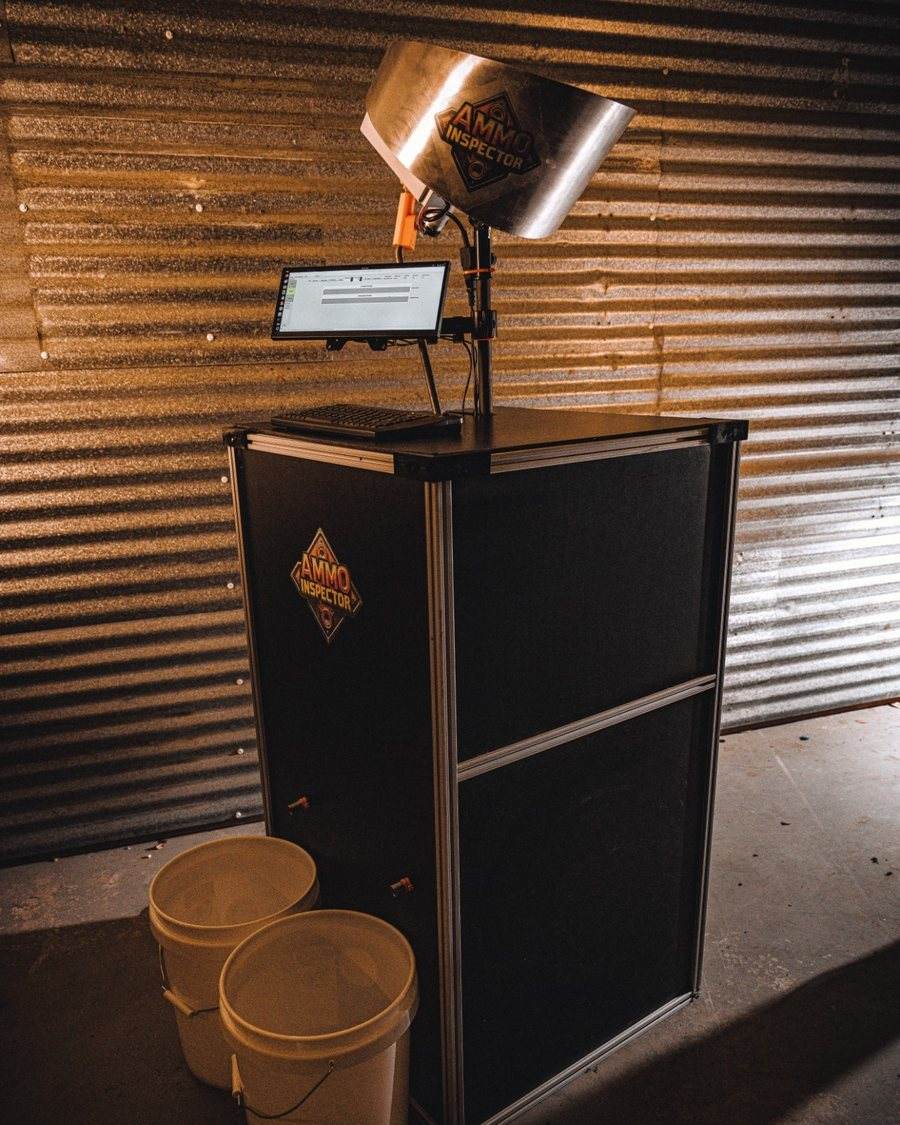
Weight catches what the eye cannot: a missing primer, a light or heavy powder charge, a wrong or defective projectile, damaged brass. Set your high and low limits as tight as 0.1 grain or as wide as ten grains for large rounds, and AccuWeigh sorts pass from fail without anyone watching a scale. Used as a sorter, it drops parts into as many bins as you need: brass and projectiles by weight class for match loading, loaded rounds by total weight for boxing.
AccuWeigh was designed and built by ammunition manufacturers using Six Sigma methods. The patent-pending firewall logic means a defective round can never be passed as good. Fed by an AccuFeed collator or a Dillon-style case feeder, it runs on its own; connected to a loader, it catches a bad run as it happens instead of after a whole lot is loaded.
| Model | Throughput | Fit | Delivery |
|---|---|---|---|
| AccuWeigh 360 | Up to 3,600 parts per hour | Cases, projectiles and loaded rounds, .308 to 9mm; larger calibers quoted | 4 to 6 weeks |
Specifications describe standard configurations. Calibers, component sizes and throughput outside these ranges are quoted as custom builds.
Inline, every-round weight inspection at loader speed, with the data to prove it.
Sort brass and projectiles into exact weight classes and load match-grade rounds from standard components.
A documented, repeatable inspection step that stands up to an audit.
Missing primers, light or heavy powder charges, wrong or defective projectiles, and damaged or wrong brass. Each shows up as a weight outside your limits for that cartridge.
Yes. Set as many weight classes as you need and it drops each part into the matching bin. That is how brass and projectiles are sorted for match loading and how finished rounds are boxed by weight.
Yes. Fed from the loader's output it pulls out-of-spec rounds as they are made, so a bad setup is caught in the first rounds rather than the whole lot.
Sort brass and projectiles to a tenth of a grain first, load them with a known charge, then weigh the finished rounds and box like weights together. The result is match consistency from standard components.
Ask. Cabinets with more than one weigh module are quoted for lines that need higher throughput on a single inspection step.
Calibers, components and volume per shift are enough to start. Standard configuration or a custom build.